How to Read a Window Energy Label: U-Factor, SHGC, and NFRC Ratings Explained for Dallas Homeowners
There is a moment every Dallas homeowner eventually faces: you are looking at a window energy label, nodding like you understand it, while your brain quietly whispers, “Is U-Factor a superhero? Is SHGC a tax form?” Don’t worry. You are not alone. Window labels can feel like they were designed by engineers, for engineers, during an especially caffeinated lunch break. But once you know what the numbers mean, choosing energy efficient replacement windows in Dallas, Texas gets a whole lot easier.
Table of Contents
- What Is a Window Energy Label and Why Should Dallas Homeowners Care?
- What Is the NFRC Rating on Replacement Windows?
- What Does U-Factor Mean for Energy Efficiency?
- What Does SHGC Mean for Dallas, Texas Homes?
- What About Visible Transmittance and Air Leakage Ratings?
- How Do You Compare Window Energy Labels Near You?
- Why Do Window Ratings Matter So Much in the Dallas Climate?
- How Often Should You Replace Your Windows in Dallas, Texas?
- Are Triple Pane Windows Worth It for Dallas Homes?
- Why Do Made in the USA Windows Matter Locally?
- What Should You Look for When Choosing Where to Buy New Windows Near You?
- What Makes Window Depot USA of Dallas Different?
- FAQ: Window Energy Labels and Replacement Windows in Dallas, Texas
- Ready to Decode Your Window Options?
What Is a Window Energy Label and Why Should Dallas Homeowners Care?
If you’ve ever shopped for new windows, you have probably seen a sticker covered in numbers, certifications, and abbreviations. That is the window energy label. It tells you how the window performs when it comes to insulation, solar heat, light, air leakage, and overall energy efficiency.
The good news is that you do not need an engineering degree, a calculator watch, or a cousin who “knows construction” to read it. You just need to understand a few key terms: U-Factor, SHGC, NFRC, Visible Transmittance, and Air Leakage. Once those click, the label becomes less like a mystery novel and more like a cheat sheet for saving money on energy bills.
What Is the NFRC Rating on Replacement Windows?
NFRC stands for the National Fenestration Rating Council. “Fenestration” is a fancy word for windows, doors, and skylights. Yes, there really is a fancy word for that. The NFRC is an independent organization that tests and certifies window performance, so homeowners can compare products fairly.
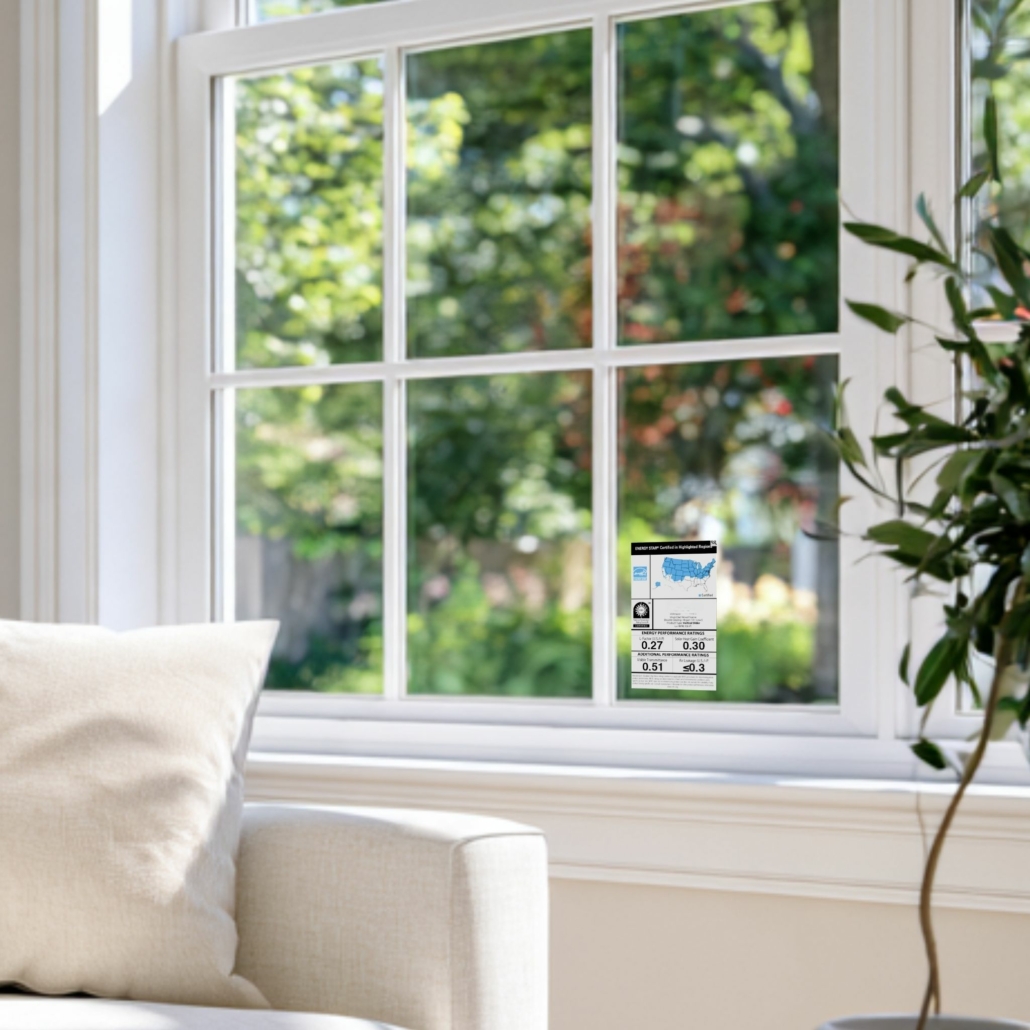
Think of the NFRC label as the nutrition label for your window. Instead of calories, sugar, and sodium, it gives you information about heat transfer, sunlight, air leakage, and comfort. When you are comparing replacement windows in Dallas, an NFRC label helps you avoid guessing based on looks alone.
What Does U-Factor Mean for Energy Efficiency?
U-Factor measures how well a window keeps heat from passing through it. The lower the U-Factor, the better the window insulates. In simple terms, a low U-Factor helps keep your cool air inside during a blazing Dallas summer and helps keep warmth indoors during those surprise winter cold snaps that make everyone run to the grocery store for bread and soup.
In Dallas, Texas, U-Factor matters because your HVAC system already works hard. If old windows are letting conditioned air escape, your air conditioner has to run longer, your rooms may feel uneven, and your energy bills may start acting like they are training for a marathon.
What Does SHGC Mean for Dallas, Texas Homes?
SHGC stands for Solar Heat Gain Coefficient. It measures how much solar heat passes through the glass. The lower the SHGC, the less heat from the sun gets into your home. That is a big deal in Dallas, where the sun does not exactly take a personal day in July.
Here’s the Texas twist: you usually want a window with a lower SHGC in hot climates because it can help reduce unwanted heat gain. That means your home can feel more comfortable, especially in west-facing rooms that turn into toaster ovens around 4 p.m.

Still, the best SHGC for your home can depend on your house layout, shade trees, glass area, and comfort goals. A shaded home in Lake Highlands may have different needs than a sun-soaked home in Frisco, Plano, or Oak Cliff. This is where local window replacement advice near you is genuinely useful.
What About Visible Transmittance and Air Leakage Ratings?
U-Factor and SHGC usually get the spotlight, but the NFRC label includes other ratings that are worth knowing. Two of the most helpful are Visible Transmittance and Air Leakage. They may sound technical, but they are pretty practical once you break them down.
Visible Transmittance, or VT, measures how much visible light comes through the window. A higher VT means more natural light. If you love bright rooms, plants on windowsills, and not turning on lamps at noon, VT matters. The trick is balancing daylight with heat control, especially in Dallas homes with large windows facing south or west.
Air Leakage, or AL, measures how much air passes through the window assembly. Lower is better. Drafty old windows can make a room feel uncomfortable even when your thermostat says everything is fine. If you have ever sat next to a window in January and felt like it was quietly exhaling cold air onto your ankles, you already understand air leakage.
These ratings help you compare products beyond appearance. A window may look beautiful in a showroom, but the label tells you how it is likely to perform in real life. And real life in Dallas includes heat, wind, humidity, pollen, storms, and the occasional day where the weather app seems to be guessing.
How Do You Compare Window Energy Labels Near You?
When comparing window energy labels, start with your climate. Dallas homeowners typically prioritize lower SHGC for solar heat control and a strong U-Factor for insulation. Then look at air leakage and visible transmittance based on your comfort preferences.
Here is a simple way to read the label without spiraling into spreadsheet mode:
- Lower U-Factor: Better insulation and less heat transfer.
- Lower SHGC: Less solar heat entering your home, helpful in hot climates like Dallas.
- Higher VT: More natural daylight.
- Lower Air Leakage: Fewer drafts and better comfort.
- NFRC Certification: Independent performance rating you can compare across brands.
Also look for ENERGY STAR certification when applicable. According to ENERGY STAR, replacing old windows with ENERGY STAR certified windows can lower household energy bills by an average of 12 percent nationwide. That is not pocket lint. That is real potential savings, especially when utility costs are already doing their best impression of a climbing wall.
Just remember: the “best” window is not always the one with one extreme number. It is the one that fits your home, your budget, your comfort goals, and the Dallas climate. Window Depot USA of Dallas can help you compare options without turning the conversation into a college physics lecture.
Why Do Window Ratings Matter So Much in the Dallas Climate?
Dallas weather keeps homeowners on their toes. One month you are preparing for triple-digit heat; another month you are checking whether your pipes need protection. That range makes energy efficiency especially important.
Your windows are part of your home’s thermal envelope. That is the barrier between conditioned indoor air and the outdoors. When the envelope is weak, your heating and cooling system has to work harder. Poorly performing windows can contribute to hot rooms, cold drafts, fading furniture, condensation, and higher monthly bills.
According to the U.S. Department of Energy, heat gain and heat loss through windows are responsible for 25% to 30% of residential heating and cooling energy use. In a place like Dallas, where air conditioning is practically a household member, that number gets your attention.
Energy efficient replacement windows can help manage solar heat, reduce drafts, and improve indoor comfort. That matters whether you live in a historic home near Bishop Arts, a suburban home in Richardson, a newer build in McKinney, or a ranch-style home in North Dallas.
Local comfort tip: If one room is always hotter than the rest of the house, do not automatically blame your HVAC system. The windows, orientation, insulation, and shading all play a role. A west-facing room with older single-pane glass can feel like it is auditioning to become a greenhouse.
How Often Should You Replace Your Windows in Dallas, Texas?
Most homeowners replace windows every 15 to 30 years, depending on window quality, installation, maintenance, weather exposure, and material type. In Dallas, intense sunlight, storms, shifting temperatures, and normal wear can all affect the lifespan of your windows.
Age alone is not the only deciding factor. Some 20-year-old windows may still function reasonably well, while other windows start causing problems sooner. The real question is whether your current windows are costing you comfort, efficiency, or money.
Common signs it may be time for replacement windows include:
- Drafts near the frame or sash
- Condensation between glass panes
- Windows that stick, rattle, or will not lock properly
- Noticeable outside noise
- Rooms that stay hot or cold no matter what the thermostat says
- Faded flooring or furniture near sunny windows
- Rising energy bills without a clear explanation
If you are noticing several of these signs, it may be time to look into local window replacement near you. Newer windows with better NFRC ratings can make a noticeable difference in day-to-day comfort.
And yes, if you have a window that requires a shoulder bump, a prayer, and a very specific angle just to open, that is also a sign. Your home should not require a wrestling move to get fresh air.
Are Triple Pane Windows Worth It for Dallas Homes?
For many homeowners, triple pane windows are worth considering because they add an extra layer of glass and insulating gas space compared to standard double-pane units. That can improve insulation, comfort, sound reduction, and energy efficiency.
Triple pane options can be especially appealing in Dallas homes near busy roads, schools, flight paths, or high-traffic neighborhoods. If outdoor noise has become your unofficial alarm clock, better glass packages can help create a quieter indoor environment.
From an energy standpoint, triple pane glass can help reduce heat transfer. That means lower U-Factor values are often possible, which supports better temperature control. When paired with the right low-E coatings and SHGC for the Dallas climate, triple pane windows can help your home feel more consistent from room to room.
They may not be necessary for every single house, but they are absolutely worth discussing if comfort, long-term efficiency, and noise reduction are high on your list. Window Depot USA of Dallas can help you compare double-pane and triple-pane options based on your home, not just a generic brochure.
Why Do Made in the USA Windows Matter Locally?
Made in the USA windows matter because quality, availability, and accountability matter. When you choose American-made products, you are often supporting domestic manufacturing, stronger quality control, and supply chains that can be easier to manage.
For Dallas homeowners, that can mean more confidence in product consistency, replacement parts, warranties, and lead times. Nobody wants to order new windows and then wait so long that the seasons change twice before installation day arrives.
There is also a local pride factor. Dallas homeowners tend to appreciate value, durability, and straight talk. Made in the USA windows fit that mindset because they are designed for real homes, real weather, and real families who would rather spend Saturday enjoying the backyard than worrying about drafts and utility bills.
Plain-English takeaway: A window is not just a piece of glass. It is a long-term home improvement product. Where and how it is made can affect performance, warranty support, and peace of mind.
What Should You Look for When Choosing Where to Buy New Windows Near You?
Choosing where to buy new windows near you is just as important as choosing the window itself. Even a high-performing product can disappoint if it is measured poorly, installed incorrectly, or recommended without considering your home’s actual needs.
Here are a few things to look for when comparing window companies in Dallas, Texas:
- Local experience: The company should understand Dallas heat, storms, neighborhoods, and home styles.
- Clear product explanations: You should understand U-Factor, SHGC, and NFRC ratings before you buy.
- Professional installation: Proper installation affects efficiency, comfort, and long-term performance.
- Strong warranties: Ask what is covered, for how long, and what the process looks like.
- No-pressure guidance: You deserve helpful recommendations, not a living-room hostage situation.
- Energy efficiency options: Look for products designed to help with saving money on energy bills.
A good local window replacement company should not just toss numbers at you and hope you nod. They should explain what those numbers mean for your home in Dallas. If a company cannot explain the label clearly, that is a red flag wearing a tiny hard hat.
What Makes Window Depot USA of Dallas Different?
Window Depot USA of Dallas is locally focused, which means recommendations are made with North Texas homes in mind. The team understands that Dallas homeowners are dealing with intense summer sun, changing weather, rising utility costs, and a wide range of home styles.
Instead of treating every house the same, Window Depot USA of Dallas can help you choose products based on how your home actually performs. Maybe your priority is cooling efficiency. Maybe it is curb appeal. Maybe it is sound reduction because the neighbor’s dog has decided 6 a.m. is concert time. All valid.
The goal is to make replacement windows simpler, more transparent, and less stressful. You should know what you are buying, why it matters, and how it can help your home. That includes walking through NFRC ratings, glass packages, frame options, and installation expectations in normal human language.
When you are shopping for energy efficiency, replacement windows, and saving money on energy bills in Dallas, having a local team near you can make a big difference. You get guidance that is connected to your climate, your neighborhood, and your goals.
FAQ: Window Energy Labels and Replacement Windows in Dallas, Texas
How do I read a window energy label in Dallas, Texas?
Answer: Start with the NFRC label. Look at U-Factor for insulation, SHGC for solar heat gain, Visible Transmittance for daylight, and Air Leakage for drafts. In Dallas, many homeowners prioritize lower SHGC and strong insulation because of the hot climate.
What is a good U-Factor for replacement windows?
Answer: A lower U-Factor generally means better insulation. The right number depends on the product and your goals, but Dallas homeowners should look for windows that reduce heat transfer and support year-round comfort.
What SHGC is best for homes in Dallas?
Answer: In hot climates like Dallas, a lower SHGC is often preferred because it helps block unwanted solar heat. This can improve comfort in sunny rooms and may help with saving money on energy bills.
Are ENERGY STAR windows worth it in Dallas?
Answer: Yes, ENERGY STAR certified products can be a smart choice because they are designed to meet energy performance standards. They can help reduce heating and cooling costs when properly selected and installed.
How often should I replace windows in Dallas, Texas?
Answer: Many windows last 15 to 30 years, but Dallas heat, storms, age, and installation quality can affect lifespan. Drafts, condensation between panes, hard operation, and rising energy bills are signs it may be time to replace them.
Do triple pane windows help with noise in Dallas neighborhoods?
Answer: Yes, triple pane glass packages can help reduce outside noise compared with older or less efficient windows. They are useful for homes near busy roads, schools, construction areas, or loud neighborhood activity.
Can better windows really help lower my energy bills?
Answer: Yes, efficient replacement windows can reduce heat transfer, drafts, and solar heat gain. Actual savings vary by home, but better window performance can help your HVAC system work more efficiently.
Ready to Decode Your Window Options?
Reading a window energy label does not have to feel like cracking a secret code. Once you understand U-Factor, SHGC, NFRC ratings, visible transmittance, and air leakage, you can compare replacement windows with confidence.
For Dallas, Texas homeowners, the big picture is simple: choose windows that help manage heat, improve comfort, reduce drafts, and support energy efficiency. The right products can make your home feel better in August, January, and all those strange Texas weather days in between.
If you are ready to explore window options near you, Window Depot USA of Dallas can help you compare ratings, styles, and performance features without the confusion. Contact Window Depot USA of Dallas today for your free quote.